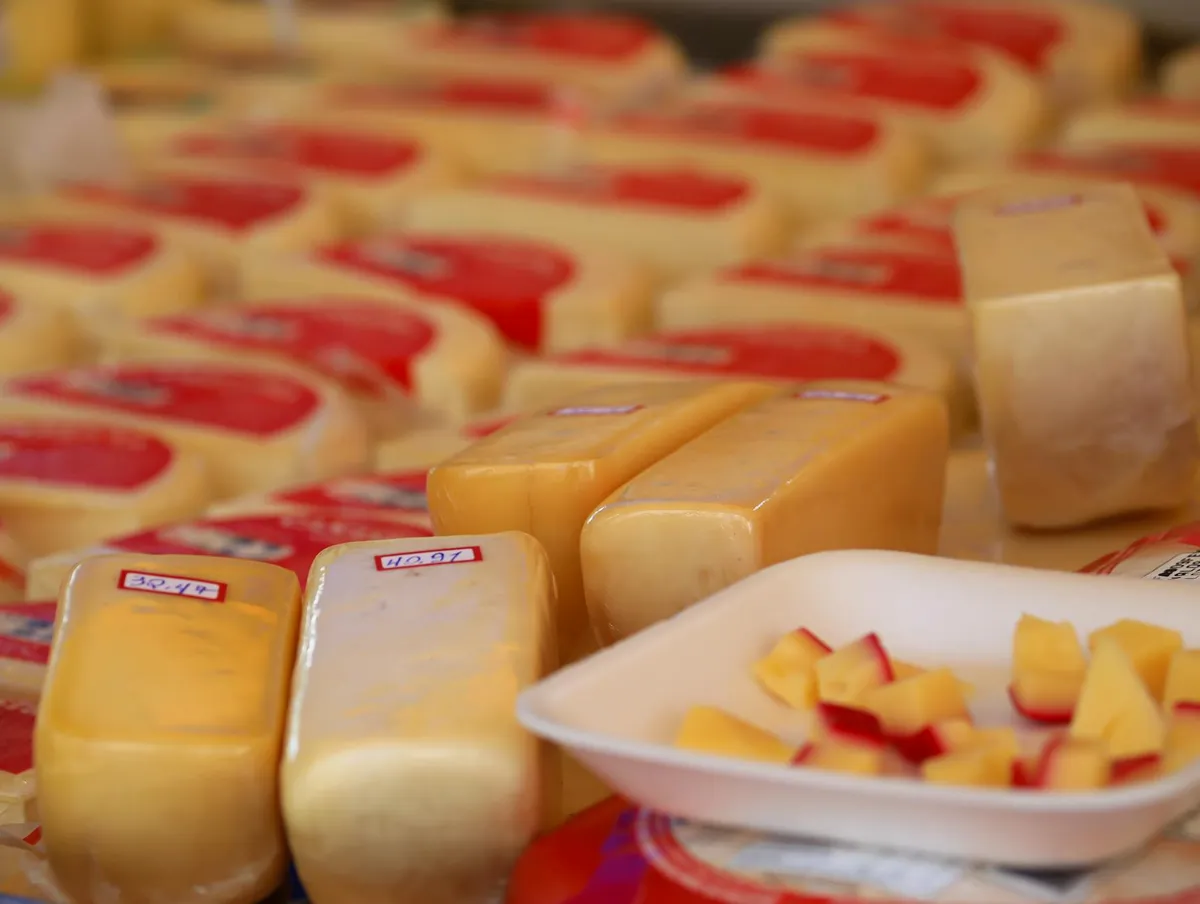
The cheese stall at my food co-op has done more for my food education than any other single source. Across the year I've been shopping there, I've been introduced to dozens of cheeses I didn't know existed, made by producers I'd never heard of, with histories and characteristics that supermarket cheese sections don't carry.
This is what I've learned about cheese through one specific cheese stall in one specific co-op.
The cheesemonger who runs the stall
The stall is run by a specific cheesemonger who knows substantial things about cheese. He sources from specific producers, knows their stories, can recommend specific cheeses for specific uses.
The relationship between cheesemonger and customer matters substantially. He recommends based on what I actually like and what I'm doing rather than just selling what's expensive.
This relationship doesn't exist in supermarket cheese sections. The supermarket cheese is selected by buyers I'll never meet, displayed without context, sold by people without specific cheese knowledge.
The cheesemonger's presence is part of what makes the cheese stall valuable beyond just the cheese itself.
British and Irish cheeses I now know
Specific British and Irish cheeses I've come to appreciate:
Sussex Charmer. A specific local cheese with substantial character. Aged Gloucester-style with distinctive personality.
Stichelton. Unpasteurized Stilton-style cheese. Substantially different from pasteurized commercial Stilton.
Mrs Kirkham's Lancashire. Traditional Lancashire from a specific producer with multi-generational tradition.
Cashel Blue. Irish blue cheese with substantial character and history.
Tymsboro. Goat cheese from West Country with specific character.
Stinking Bishop. Washed-rind cheese with distinctive aromatic character.
Each has specific character. Each comes from specific producers. None are available at typical supermarkets.
European cheeses beyond the standard
European cheeses I've discovered beyond the supermarket standards:
Comté across age ranges. Comté at 12 months differs substantially from Comté at 24 months. Specific ages have specific characteristics.
Tomme cheeses. Various Tomme styles from different producers with substantial character variation.
Specific Swiss alpine cheeses. Beyond Gruyère, various alpine cheeses with specific seasonal and producer variations.
Specific Spanish manchegos. Beyond commodity manchego, specific producers offer substantial character.
Italian cheeses with specific producer stories. Beyond commodity Parmesan and mozzarella, specific producers offer substantial differentiation.
The European cheese world is substantially larger than supermarket selection suggests.
How tasting changed across the year
My cheese tasting has evolved substantially:
Early in the year I tasted cheeses without much vocabulary or framework.
The cheesemonger taught me specific things to taste for: rind character, paste texture, aging notes, specific flavor markers.
I started recognizing producer signatures across different cheeses from same producer.
Specific seasonal variations in same cheese became apparent.
I developed preferences I couldn't have articulated initially.
The tasting capability development was substantial. I can now identify and articulate cheese characteristics in ways I couldn't a year ago.
What cheese costs at the co-op
The cost reality of co-op cheese:
Substantially more expensive than supermarket cheese — typically 50-200% more per kilogram.
Substantially better quality than supermarket equivalents in most categories.
The math works through eating less but better cheese.
Buying small portions of multiple cheeses produces variety despite higher per-unit cost.
Some specific cheeses (specific aged styles particularly) are dramatically more expensive at the co-op but unavailable at supermarkets at any price.
The cost premium is real. The value depends on how much cheese matters to your eating.
How I store and use cheese now
Cheese handling has become more deliberate:
Specific cheeses get specific storage. Hard cheeses tolerate the refrigerator; soft cheeses prefer specific conditions.
I serve cheese at proper temperature rather than refrigerator-cold. The temperature matters substantially for flavor.
I cut cheese with appropriate knives for specific cheese types. The cutting affects what the cheese tastes like.
I match cheeses with appropriate accompaniments — specific breads, specific fruits, specific drinks.
The deliberate handling produces dramatically better cheese experience than casual handling did.
What good cheese does in cooking
Cooking applications I've developed through co-op cheese:
Substantial Parmesan or Comté on pasta substantially improves the dish over commodity Parmesan.
Specific blue cheeses transform salads in specific ways.
Specific aged cheeses make remarkable cheese sauces with specific characteristics.
Specific fresh cheeses replace cream cheese in specific applications with substantial character improvement.
The cooking improvement from quality cheese is substantial when used in dishes that highlight the cheese.
The cheese pairing education
I've developed cheese pairing capability through the cheese stall:
Specific cheeses pair with specific wines in ways that aren't obvious without tasting.
Specific honey types complement specific cheeses substantially.
Specific breads create different cheese experiences from same cheese.
Specific seasonal fruits create specific cheese pairings.
The pairing dimension multiplies what cheese can do beyond just eating it alone.
What I miss from before
For honesty about trade-offs:
I miss the convenience of pre-grated Parmesan that lasted months in the fridge.
I miss the predictability of commercial cheese — no thinking required.
I miss the lower cost of buying cheese without considering specific producers.
I miss the convenience of cheese available at midnight at the supermarket when needed urgently.
The trade-offs are real. The benefits of better cheese outweigh them for me but not for everyone.
Producers I now know about
Specific producers whose work I now follow:
Mrs Kirkham's Lancashire (Lancashire, UK) — traditional Lancashire production.
Neal's Yard Dairy as distributor — substantial distributor of British and Irish farmhouse cheese.
Specific French producers — multiple producers across French regions whose cheeses appear at the stall.
Specific local producers — cheesemakers within driving distance whose work I now seek out.
The producer awareness changes how I think about cheese. The cheese has specific origins rather than just being product.
How the cheesemonger's recommendations work
The recommendation process:
The cheesemonger asks what I'm doing — specific dish, specific occasion, specific preference.
He recommends based on his knowledge of available cheeses and my situation.
The recommendations are substantially better than I'd make myself.
I learn something through each recommendation about what specific cheeses do and where they fit.
The relationship is genuinely advisory rather than just transactional.
This relationship is part of what makes the co-op cheese experience substantively different from supermarket cheese.
Specific learning moments
Several specific cheese moments stand out from the year:
Tasting young vs aged versions of the same cheese side by side. The aging differences became dramatically clear.
Tasting cheese at room temperature vs cold. The temperature effect on flavor was startling.
Tasting cheese with specific accompaniments vs alone. The pairing effects were substantially more dramatic than I had recognized.
Meeting a specific producer at a co-op event and tasting the cheese with the producer present. The story changed how the cheese tasted.
Trying a cheese the cheesemonger recommended that I would never have selected myself, and discovering it was substantially what I wanted.
Each moment produced specific learning that has continued to shape my cheese engagement.
What I'd tell new co-op cheese shoppers
Practical advice for people new to co-op cheese:
Talk to the cheesemonger. Their knowledge is the substantial value beyond just the cheeses themselves.
Buy small portions of multiple cheeses. Variety is more interesting than larger portions of fewer cheeses.
Ask for tasting before buying. Most co-op cheesemongers will let you taste before purchasing.
Develop tasting vocabulary. Reading about cheese and trying cheeses with specific attention develops capability over time.
Try cheeses you wouldn't normally choose. The recommendations of someone who knows cheese substantially exceed self-selection.
Take notes. Memory for specific cheeses fades. Notes help build cumulative knowledge.
Visit producer farms when possible. The on-farm experience deepens cheese appreciation substantially.
The advice produces substantial benefit for new co-op cheese shoppers.
The broader cheese landscape
The co-op cheese experience reflects broader cheese realities:
Substantial cheese variety exists beyond supermarket selection.
Specific producers maintain traditions despite economic pressure.
Cheesemonger expertise substantially affects what consumers experience.
Cheese culture has substantial depth that casual engagement misses.
The cheese world rewards sustained attention through accumulated capability and pleasure.
The co-op cheese stall is one window into this broader cheese world.
What I want next
Future cheese exploration I'm planning:
Visit specific producer farms whose cheese I've come to value.
Try specific cheese-focused regions when traveling.
Develop home cheese-aging capability for specific cheeses that benefit.
Try making fresh cheeses at home for specific applications.
Explore specific cheese-and-drink pairings more systematically.
The cheese exploration continues. The co-op stall got me started; the broader cheese world is large.
The honest summary
One year of co-op cheese stall shopping has substantially expanded what I know about cheese, what I cook with cheese, and how I think about cheese as part of food experience.
For people who haven't engaged with quality cheese, the discovery is substantial. The supermarket cheese world represents a small fraction of what cheese actually is.
For the cheese stall and cheesemonger specifically, the relationship matters substantially beyond just the transactions. The advisory relationship produces substantially better cheese choices than I could make alone.
For broader food experience, cheese is one specific category where co-op shopping produces dramatic quality improvement. The cheese alone might justify the entire co-op shopping pattern.
For people considering deeper cheese engagement, find a substantial cheesemonger and develop the relationship. The investment in the relationship pays back substantially.
The cheese world is large. The exploration continues. The pleasure compounds across the years that the relationship sustains itself.
Visit your local cheese stall. Talk to the cheesemonger. Try things you wouldn't normally choose. The cheese world will open up substantially.